Given that in
 the next two decades robots will be capable of replacing humans in most manufacturing and service jobs, economic development will be primarily determined by the advancement of robotics. Given Japan's current strength in this field, it may well become the economic leader in the next 20 years. Marshall Brain also discusses the emergence of robotic economy.
Unfortunatly, due to Japan's shrinking population and poor government intervention plans, they will be completly unable to capitalize on their (shrinking) advantage in technology. India's vast advantage in the fields of technology, and Germany's massive amounts of capital will make them far larger powers then Japan.
Microsoft Robotics Studio
Microsoft is currently working to stabilize the fragmented robotics market with its new software Microsoft Robotics Studio.
Humanoid robots
Lara is the first humanoid robot with artificial muscles (metal alloy strands that instantly contract when heated by electric current) instead of electric motors (2006).
Asimo is one of the most advanced projects as of 2006.

- Utilit
 y fog.
 - Scenario:Modular Robots. Modular robots can be built from standard building blocks that can be combined in different ways.
- M-Tran- a snake-like modular robot that uses genetic algorithms to evolve walking programs
- Self replicating robots - modular robots that can produce copies of themselves using existing blocks.
- Swarmanoid is a project that uses 3 specialized classes of robots (footbots, handbots and eyebots) to create an effective swarm. Such swarm should be able, for example, to tidy a bedroom with each robot doing what it is best at.

Police Robots
Being a police officer or a fireman is a dangerous job. They will be replaced by robots. Robot police officers will be sent to the scene of the crime to stop it. The police robots will know automatically who is committing the crime (city awareness grid electronic C.A.G.E). People are afraid of robots with guns. Guns will be illegal in the future. Police robots will only have non-lethal weapons.
Applications
- Caterpillar plans to develop remote controlled machines and expects to develop fully autonomous heavy robots by 2021. Some cranes already are remote controlled.
- It was demonstrated that a robot can perform a herding task.
- Robots are increasingly used in manufacturing (since 1960s). In auto industry they can amount for more than half of the "labor". There are even "lights off" factories such as an IBM keyboard manufacturing factory in Texas that are 100% automated.
- Robots such as HOSPI are used as couriers in hospitals, etc. Other hospital tasks performed by robots are receptionists, guides and porters (not to mention surgical robots such as Da Vinci)
- Robots can serve as waiters and cooks . Some fast-food restaurants do not have humans take orders; instead customers use touchscreens to order food
As of 20 06 there is a large robot development program in the US military. Ground robots and UAVs are already used in Iraq. Robotic border defenses are being developed in Korea, US and the EU.
It is likely that 20 or 30 years from now that the UN will make guns illegal in war because of newly developed non lethal weapons that cans be used by robots instead. (what's the point of having non lethal weapons in war??! that's not gonna do anything people, get a life!!!) Most of war in the future will take place in urban environments. The manufacturing of military robots that kill people will be considered a war crime. Unfortunatly, the UN's decreasing power and credibility, and their complete inability to outlaw WMDs so far will make this entirely meaningless. Countries that are non-compliant, such as China, North Korea, and several others scattered across the globe will continue undercover advanced weaponry programs. Of course, in the name of its own defense, the United States and the European Union will do the same, leading to a second arms race. It is also likely that robots with non lethal weapons will be rented or purchased by a country to keep the peace as law enforcers. Growing anarchist forces, particularly based in Greece and Eastern Europe will oppose these new robots and vandalism and citizen non-compliance will be a major issue.
The use of Robot Flys will revolutionize Urban combat.
See also War Technology.
- hands & grips
- miniaturization
Timeline
Scenario:Robotics
Developments related to robotics from the NISTEP 2030 report:
- 2013-2014 — agricultural robots
- 2013-2017— robots that care for the elderly
- 2017— medicle robots performing low-invasive surgery
- 2017-2019 — household robots
- Unknown — Nanorobot US Department of Defense plans:
- 2015— to have one third of its fighting capacity provided by robots
- 2035 — to have first completely autonomous robot soldiers on the battlefield
Robotics in 2020
Robot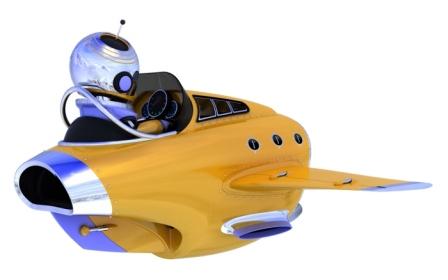
Purposes of these Robots:
- Robotized space vehicles and facilities
- Anthropomorphic general-purpose robots with hands like humans used for factory jobs - Intelligent robots for unmanned plants - totally automated factories will be commonplace.
- Robots for guiding blind people
- Robots for almost any job in home or hospital, including Robo-surgery.
- Housework robots for cleaning, washing etc - Domestic robots will be small, specialized and attractive, e.g. cuddly

No comments:
Post a Comment